Offsite Supervision
Offsite Supervision
The division is responsible for developing and maintaining a risk-based supervisory framework that supports effective oversight of LFIs, RHPs and ICRPs, from an offsite supervision perspective. The division’s key functions include:
Performing desk-based monitoring and supervision of LFIs, RHPs, and ICRPs through the collection and analysis of AML/CFT/CPF data returns. This includes:
-
Tracking remedial actions recommended in examination reports.
-
Ensuring compliance with deadlines stipulated for corrective measures.
The division ensures LFIs, RHPs and ICRPs meet remedial action plan targets and deadlines through follow-up reviews (desk-based file checks). If remediation is inadequate, actions may include enforcement referral, senior management notification, or appointment of a third-party monitor, among other actions.
Conducting risk assessments at the institutional, sectoral and sub-sectoral level, as well as thematic risk assessments across sectors and sub-sectors to identify emerging vulnerabilities and prioritize supervisory actions.
Reviewing licensing applications from an AML/CFT/CPF perspective to ensure compliance with regulatory standards before approval.
Preparing the annual risk-based supervisory calendar, which serves as a roadmap for planning and executing supervisory activities across sectors.
Monitoring ML/TF/PF risks across sectors by analyzing data trends to identify systemic vulnerabilities and inform policy decisions.
Overseeing the development and issuance of new guidances and guidelines for LFIs, RHPs and ICRPs to strengthen AML/CFT/CPF compliance frameworks.
Conducting targeted reviews on specific themes or risk areas to assess sector-wide practices and identify gaps
AMLD – Sector Impact
-
Safeguarding against financial crime
The outcome of the reviews aided the safeguarding of institutions and the financial industry in the UAE against money laundering, fraud and other illicit activities.
-
Fostering trust and confidence
By demonstrating a commitment to regulatory compliance and risk management, financial institutions foster trust among local and international stakeholders.
-
Identifying risks and weaknesses
By leveraging the expertise of financial crime professionals, the reviews helped to identify potential risks and weaknesses in the operations of financial institutions.
-
Improving operational efficiency
By focusing on the effectiveness and efficiency of financial crime compliance frameworks, the examinations contribute to the improvement of operational efficiency, and the enhancement of the overall performance of financial crime compliance controls in financial institutions.
-
Suspicious Activity Reporting
The CBUAE has observed an increase in both the number and the quality of activity reports to the FIU.
The UAE Financial Sector’s Improvement, Year on Year
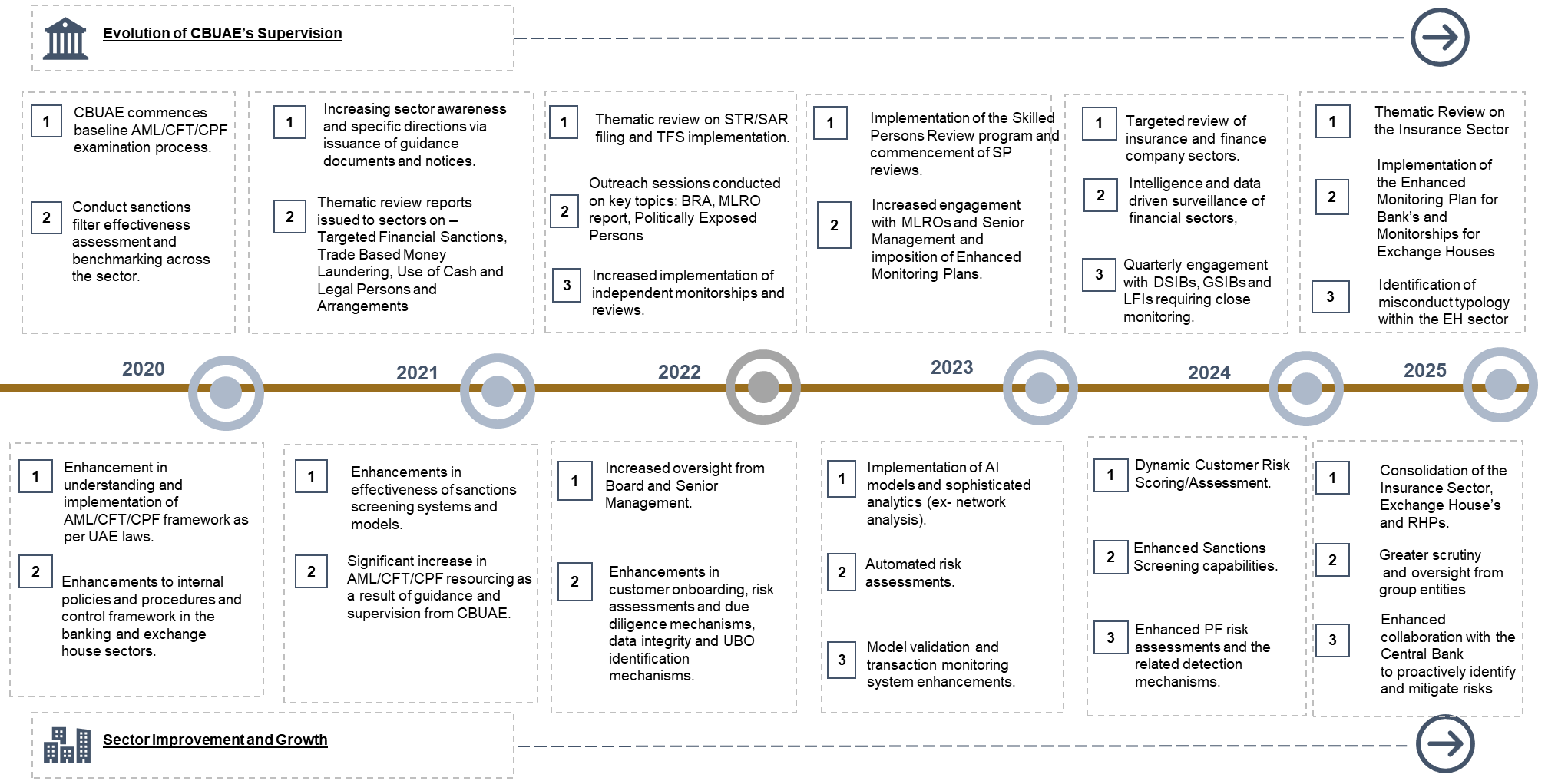
Growth per sector (2019-2024)


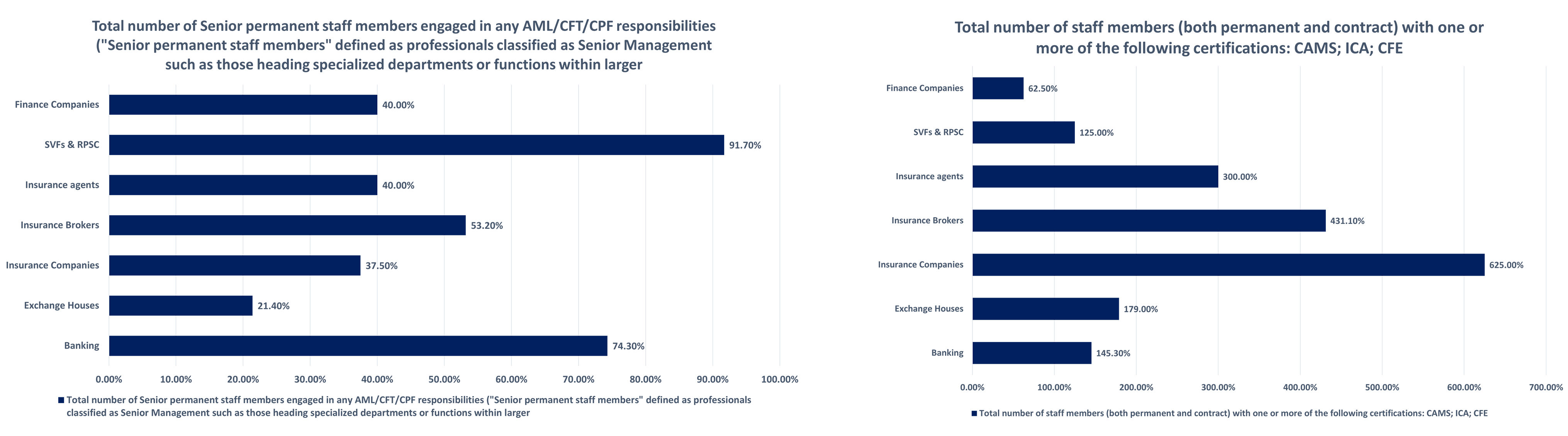

AML/CFT/CPF National Outreaches, Seminars and Training
AMLD conducts Outreach activities as part of its effort to convey supervisory expectations to LFIs/RHPs/ICRPs, and educate them on emerging ML/TF/PF issues that are applicable sector-wide and nationally.
Delivered to selected groups based on supervisory priorities, risk assessments, or observed weaknesses. Includes training for financial institutions, DNFBPs, or sectors that have demonstrated higher ML/TF risks or deficiencies. Training often incorporates case studies, supervisory outcomes, enforcement lessons, typologies, and FATF guidance to close knowledge gaps and strengthen compliance culture in the most vulnerable areas. CBUAE also deliver targeted training when there are emerging risks and trends.
Initiated following formal Notices and Circulars issued by CBUAE to communicate new requirements, FATF recommendations, or urgent sectoral risks or emerging threats. Awareness sessions often accompany significant Notices or technical Notices to ensure institutions supervised by the CBUAE not only receive updates but also understand their practical application and supervisory expectations.
Broad training sessions open to all supervised entities across banking, insurance, finance companies, exchange houses, registered hawala providers and other supervised institutions. Provides a common baseline of AML/CFT awareness, including international developments, FATF priorities, emerging ML/TF threats, and lessons learned from national and international evaluations. The training helps to ensure consistency in understanding across the sector.
The CBUAE periodically organizes summits and forums aimed at bringing together relevant stakeholders to discuss and strengthen the national framework for combating financial crimes. For example, in 2024, CBUAE hosted the National Summit on Financial Crime Compliance: Threats, Vulnerabilities, and Controls, which served as a platform for dialogue and knowledge-sharing among participants.
Training organized by CBUAE which is tailored to the specific roles and responsibilities of employees, ensuring that each participant receives guidance relevant to their job function. For example, specialized training is provided for Money Laundering Reporting Officers (MLROs) to enhance the knowledge required to effectively oversee and manage AML/CFT/CPF compliance risks within their organizations.
Examples of some of the AML/CFT/CPF Guidance issued in 2025
Best Practices for Licensed Financial Institutions on Implementing Role-Based AML/CFT/CPF Training
Best Practices for Licensed Financial Institutions on Implementing a Risk-Based Approach and Conducting Risk-Based Institutional Risk Assessments
Guidance for Licensed Financial Institutions on Correspondent Banking and Expectations for Managing Correspondent Banking Relationships
Guidance for Licensed Financial Institutions on Customer Due Diligence/Know Your Customer and Record-Keeping
Examples of some of the Outreach and training sessions delivered in 2025
Thematic Review on Compliance with Screening Against UAE Local List and UNSC Sanctions List in the Banking Sector – Issued 2026
Thematic Review of providers of Stored Value Facilities, Retail Payment Services and Card Schemes, and Payment Token Services – Issued 2026
AML/CFT/CPF Thematic Review of Insurance Sector – Issued 2025
Thematic Review – Suspicious Transaction Report (STR) – Issued 2023
Thematic Review - Targeted Financial Sanctions (TFS) – Issued 2023
Thematic Review on Counter Measures on FATF - High Risk Jurisdiction – Issued 2022
Thematic Review on Legal Persons and Arrangements (LPA) - Issued 2022
Thematic Review on Cash – Issued 2022
Thematic on Targeted Financial Sanctions (TFS) and Trade Based Money Laundering (TBML) – Issued 2022
Thematic Review on Sanctions Screening Testing - Issued 2021
Last updated on: Wednesday 09 September 2026
Total visitors 2125
Rate this page
Rated by 0 People
Thanks for rating