Sustainable Finance

Sustainable Finance in the UAE
The Central Bank of the UAE continuously oversees and implements wide-ranging initiatives advancing sustainable finance in the UAE financial sector and addressing effective management of climate-related financial risks. The UAE financial sector has emerged among global and regional leaders in sustainable finance.
The CBUAE comprehensively integrates sustainability across its key functional and policy areas, building on its landmark programmes announced during COP28 and the Year of Sustainability in the UAE. These sustainable finance initiatives contribute to advancing innovation, resilience, and sustainability in the UAE.
Mobilising Sustainable Finance in the UAE
At the COP28 Finance Day, the CBUAE brought together key participants in the UAE banking sector with a target of mobilising AED 1 trillion (USD 272 billion) in sustainable finance by 2030. Building on the COP28 announcement, the implementation of the AED 1 trillion target in sustainable finance advanced significantly and will continue through 2030. This landmark commitment was achieved through close collaboration with UAE national banks. The outcome advances the UAE’s forward-looking and ambitious global and regional leadership in sustainable finance.

Effective Management of Climate-Related Financial Risks
To enhance the regulatory standards for managing climate-related risk in the UAE financial sector, the “Principles for the Effective Management of Climate-Related Financial Risks” were developed through collaboration with the UAE Sustainable Finance Working Group, of which the CBUAE is a member. The principles define the expectations of the UAE regulators for the governance and risk management of climate-related financial risks by financial sector entities operating in the UAE.
Principles for Sustainability-Related Disclosures
The “Principles for Sustainability-Related Disclosures for Reporting Entities” were developed through collaboration with the UAE Sustainable Finance Working Group, of which the CBUAE is a member. The principles aim to enhance transparency and achieve high-quality and relevant sustainability-related disclosures, as part of the joint efforts of the UAE supervisory authorities to upgrade requirements for the UAE financial institutions according to the best international practices.

Innovative Technologies for Sustainable Finance
The CBUAE, in partnership with the COP28 Presidency and the Bank for International Settlements (BIS), launched the COP28 TechSprint to advance technology innovation for sustainable finance with a focus on artificial intelligence, blockchain, and sensory technologies. Significant progress was made with key insights outlined in a report on “Innovative Technologies for Sustainable Finance” issued in 2024. The CBUAE has also implemented a proof of concept of one of the winning solutions of the COP28 TechSprint in its modelling of climate-related financial risks.

Climate-Related Financial Risk Stress Testing
The UAE banking sector’s climate-related financial risks stress-testing covers both transition and physical risks. With regard to transition risk, UAE banks conducted a climate-related transition risk stress test on corporate lending to climate-risk vulnerable sectors, focusing on the largest corporate borrowers in those sectors using NGFS climate scenarios. Additionally, the CBUAE performed a climate-related physical risk scenario analysis, examining banks’ real estate lending exposure to rainfall flood and storm surge hazards under IPCC scenarios.

Roadmap for Islamic Sustainable Finance
The international “Roadmap for Islamic Sustainable Finance” was announced at a roundtable attended by key Islamic finance infrastructure organisations, including the Islamic Financial Services Board (IFSB), the General Council for Islamic Banks and Financial Institutions (CIBAFI), and the Accounting and Auditing Organisation for Islamic Financial Institutions (AAOIFI). The roadmap outlines comprehensive steps to advance sustainability in Islamic finance, including prudential standards, disclosure guidelines, market development initiatives, and capacity-building programmes.

Islamic Sustainable Finance
To encourage Islamic financial institutions in the UAE to integrate sustainability into their practices and activities, the CBUAE formulated the “Guiding Principles Regarding Islamic Sustainable Finance” to institute and effectively implement sustainability-related measures. The guiding principles aim to elevate the standing of Islamic finance and show that, because of the robustness of Shari’ah regulations, it is a leading sector for sustainable finance in the UAE. The CBUAE also issued the UAE Islamic Finance Report, providing an overview of Islamic sustainable finance across the UAE.

Advancing Sustainability Regulatory Frameworks
The CBUAE continued its efforts to raise the profile of sustainability in regulatory frameworks. Substantial progress has been made on the “Climate-Related Financial Risk Management Regulation”, which seeks to establish an overarching prudential framework for climate-related risk management and aims to ensure that financial institutions have in place appropriate governance and risk management processes to identify and manage material climate-related financial risks.

Supervision of Climate-Related Financial Risks
The CBUAE supervises the management of climate-related financial risks in the financial services industry. The CBUAE completed climate-related financial risk thematic reviews, examining selected financial institutions to determine their compliance with the “Principles for the Effective Management of Climate-Related Financial Risk”. In addition, the CBUAE implemented capacity-building activities for supervisors and integrated climate-related financial risks as part of its risk-based supervisory approach.

Responsible Investments and Risk Management
Along with its primary fiduciary objectives, the CBUAE also accounts for Socially Responsible Investment (SRI) considerations in the management of official foreign exchange reserves. CBUAE foreign exchange reserve portfolios maintain exposure to ESG financial assets while aligning closely with relevant portfolio benchmarks. Furthermore, the CBUAE adopted an ESG Risk Framework for Foreign Reserves in 2024, further strengthening and broadening its comprehensive financial risk management approach.

Sustainable Islamic M-Bills
The CBUAE commenced the development of a Sustainable Islamic M-Bills programme. This aims to develop a Shari’ah-compliant and sustainable equivalent to existing M-Bills, which can be posted as collateral to access the CBUAE’s standing and liquidity insurance facilities. Sustainable Islamic M-Bills would also support collateralisation among market participants and facilitate parity between conventional and Islamic financial institutions. The first phase focused on assessing the feasibility and potential size of the programme.

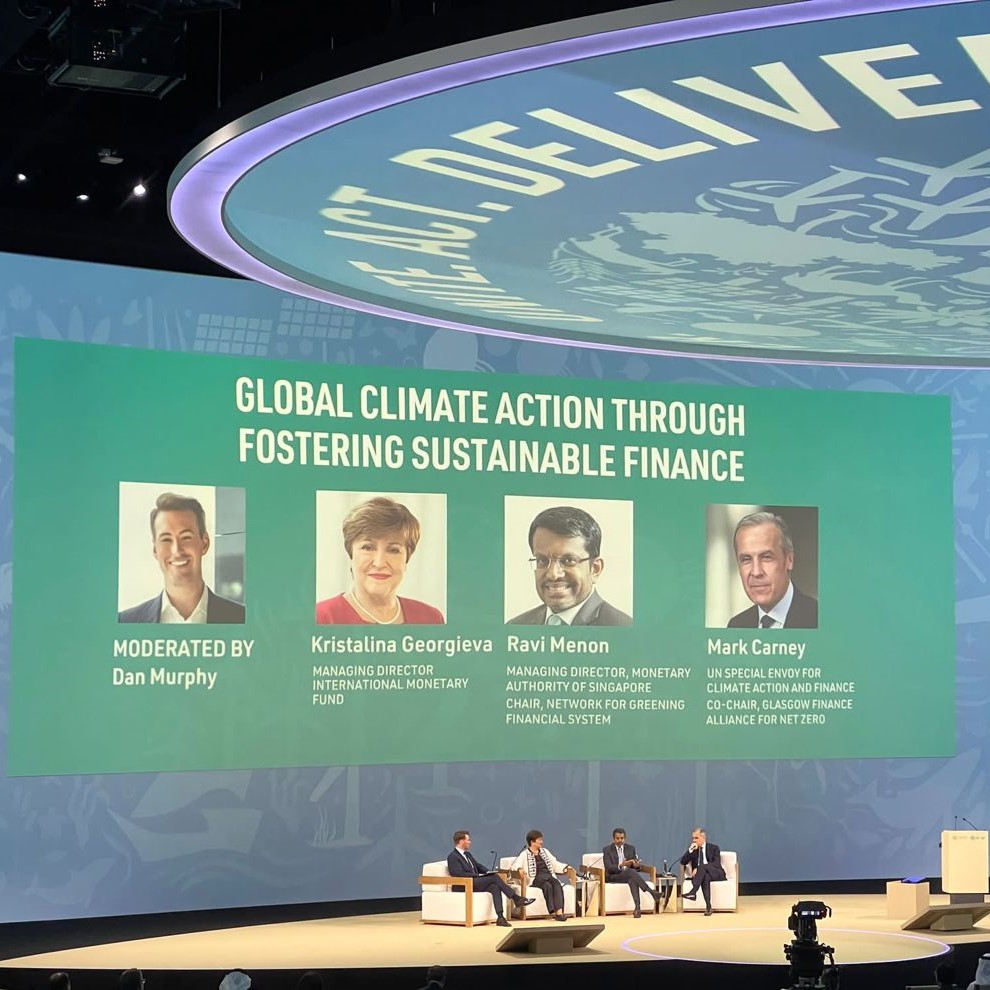
Global Climate Action Through Fostering Sustainable Finance
The CBUAE, in cooperation with COP28, organised a global event on the COP28 Finance Day to advance international sustainable finance efforts. The event brought together global leaders from key international financial institutions, notably the International Monetary Fund (IMF), the Monetary Authority of Singapore, and the UN's Climate Envoy for Climate Action. Building on the momentum from COP28, the implementation of climate and sustainable finance initiatives continued to gain significant traction in the UAE as well as in the region and globally.
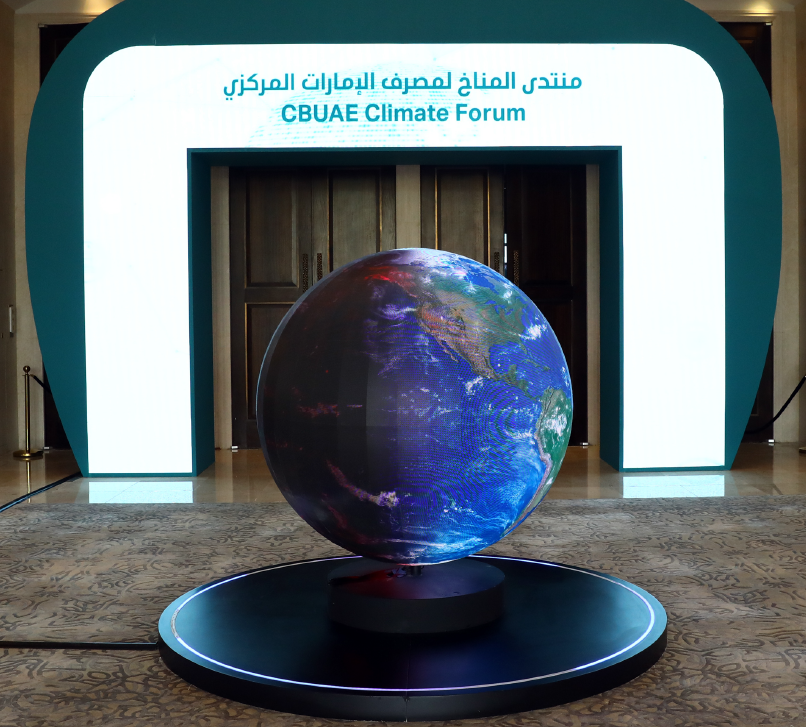
Climate Forum
The Climate Forum, organised by the CBUAE, reaffirmed the importance of effective dialogue and close collaboration among key stakeholders in addressing climate-related financial risks, advancing sustainable finance and exchanging best practices to strengthen the resilience of the financial system and accelerate climate action. The forum comes as part of the CBUAE’s ongoing efforts to drive the transition towards a more sustainable financial system and strengthen its vital role in leading sustainable finance efforts.
Financial Sector Sustainability Roundtable
To support the CBUAE’s efforts in promoting sustainability in the financial sector and facilitating collaboration among stakeholders, the “UAE Financial Sector Sustainability Roundtable” was organised to highlight sustainability-related regulatory, supervisory and industry developments. The roundtable brought together senior members of the CBUAE with selected CEOs and senior executives. It addressed the key challenges, opportunities, and regulatory efforts relating to the management of climate-related financial risks.

Currency Management
The CBUAE’s award-winning AED 500 banknote, launched during the UAE’s Year of Sustainability, showcased a design reflecting the country’s globally recognised approach to climate action, sustainable solutions, and innovation. It features the Terra Sustainability Pavilion in Expo City Dubai, the Museum of the Future, Emirates Towers, and the Burj Khalifa. This and other CBAUE banknotes created from advanced polymer material are both more durable and recyclable, reducing their environmental footprint.

Art Through Banknotes Initiative
The CBUAE Youth Council, in collaboration with the Ministry of Culture and Youth, organised an art competition during COP28 called ‘Art Through Banknotes’. Participating artists created art using shredded banknotes on one of the following themes: finance, trade, or gender equality. The winners were selected based on input from a panel of judges and public voting. The CBUAE Youth Council also organised the CBUAE Goes Green initiative, raising awareness and engaging CBUAE employees in sustainability.

Last updated on: Tuesday 24 February 2026
Total visitors 10876
Rate this page
Rated by 0 People
Thanks for rating